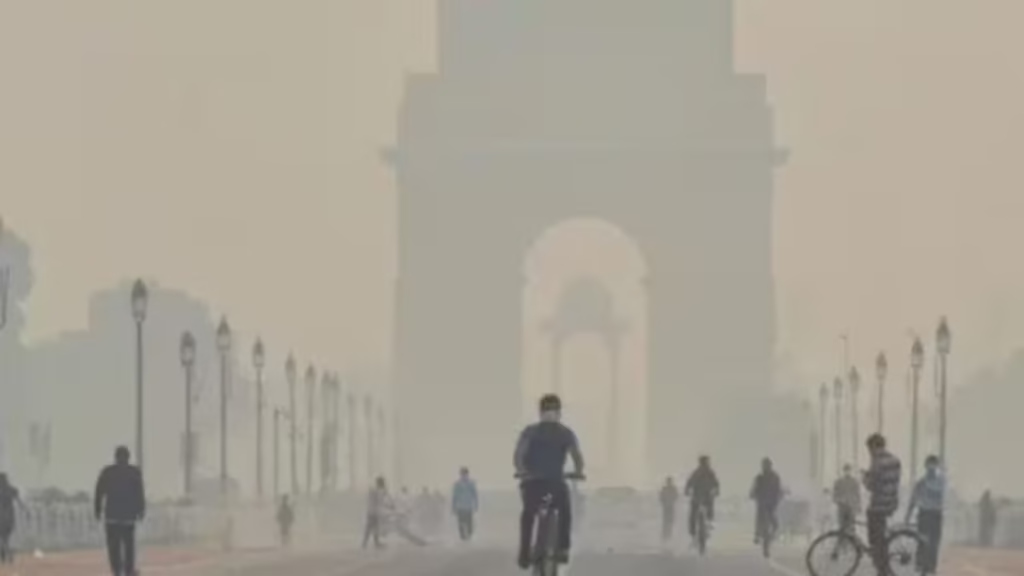
Delhi’s air quality took a sharp turn for the worse this weekend, prompting authorities to invoke Stage II of the Graded Response Action Plan (GRAP) across the National Capital Region. The decision came after the Air Quality Index (AQI) crossed the ‘very poor’ mark on Saturday evening, touching 302, according to data from the Commission for Air Quality Management (CAQM).
A special meeting of the Sub-Committee on GRAP reported a “continuing increase in pollution levels” throughout the day. India Meteorological Department (IMD) and IITM weather forecasts signalled further decline over the next few days, compelling the immediate implementation of Stage II measures — aside from those already in effect under Stage I. https://www.aqi.in/dashboard/india/delhi/new-delhi
Pollution Hotspots Across the Capital
Data from the Central Pollution Control Board (CPCB) showed Delhi’s overall AQI at 296 on Sunday afternoon, just below the ‘very poor’ threshold. Out of 38 monitoring stations, 12 reported “very poor” air, with Anand Vihar topping at 430, followed by Wazirpur (364), Vivek Vihar (351), and Dwarka (335).
Locals complained about the annual crisis. “Year after year, it is the same — breathing gets harder, particularly for cyclists like me,” complained Aryan Gupta, a Rohini resident. He attributed the suffocating smog to vehicular exhaust, stubble burning, and fireworks.
What Stage II of GRAP Means
Stage II is activated when AQI values are between 301 and 400. It demands stricter dust control, augmentation of public transportation, and limitation of diesel generator sets.
Main measures are:
Prohibition on coal and firewood, including tandoors in restaurants.
Prohibition on diesel generator sets, only for essential services.
Daily cleaning of roads and sprinkling of water, especially in congested areas.
Hike in parking charges to reduce the usage of personal vehicles.
Augmentation of metro and bus services.
Continuous supply of electricity in order to minimize the usage of DG sets.
The CAQM has also appealed to Resident Welfare Associations (RWAs) to distribute electric heaters to outdoor workers in order to avoid open burning of waste. Entry into Delhi is only allowed for CNG, electric, or BS-VI diesel inter-state buses.
Growing Fears Pre-Diwali
Officials fear the situation may worsen with Diwali celebrations and unfavourable meteorological conditions. The pollution levels in Noida and Ghaziabad have already been classified as ‘very poor’, while Faridabad recorded ‘moderate’ air quality.
The CPCB classifies AQI between 301–400 as “very poor” and 401–500 as “severe”. With Delhi’s pollution inching toward that red zone, authorities are urging citizens to limit personal vehicle use and avoid open burning.
As Delhi prepares for Diwali, the question still is how to balance celebration and public health — before the capital becomes a gas chamber of grey skies and breathless mornings once again.
FOR MORE : https://civiclens.in/category/national-news-civiclens-in/
About the Author



1 thought on “Delhi Air Turns Toxic Again: GRAP Stage II Restrictions Imposed as AQI Crosses 300”