
According to reports in the US and Europe, Donald Trump endorsed a new, highly controversial peace proposal that aims to end the war between Russia and Ukraine. The so-called 28-point plan has allegedly prompted backlash across Kyiv, European capitals, and even parts of Washington.
According to sources, speaking to several outlets including Axios, Reuters, the Financial Times, and The Telegraph, the plan comprises far-reaching concessions to Moscow, which Ukraine has long argued would amount to forced capitulation.
The reported plan outlines major terms, and both Kyiv and Moscow are reacting to them while US and European officials express growing alarm.
What does Trump’s new ‘peace plan’ include?
According to briefed officials and media reports, the proposal incorporates three broad pillars:
- Security guarantees
- Future security architecture in Europe
- US relations with Russia and Ukraine
However, the most contentious aspect appears to be the list of concrete demands imposed upon Ukraine.
1. Ukraine must cede significant territory in the east
The plan would require Ukraine to cede the Donetsk region and effectively hand control of the wider Donbas to Russia.
The bill stipulates that Ukraine would retain legal ownership of the territory, according to The Telegraph, but de facto control would pass to Russia in exchange for an unspecified “rental fee.”
This mirrors the previous Kremlin-backed ideas of “land for peace,” which Kyiv has continuously opposed.
2. Ukraine has to sharply reduce its military strength
Two officials said the plan obligates Ukraine to
Cut the size of its armed forces by half
Eliminate long-range missiles from its arsenal
Such a state of affairs would drastically reduce Ukraine’s capacity for self-defense against further Russian aggression.
3. Limits on Western military assistance
The proposal reportedly includes new limits on US military assistance and on the categories of weapons that Ukraine could receive or operate.
How did the plan emerge?
The 28-point proposal reportedly drafted through informal backchannels involving:
Steve Witkoff, special envoy for Trump
Kirill Dmitriev, a key Kremlin adviser
Ukrainian national security chief Rustem Umerov
Sources describe Witkoff as an “important but unofficial” communication link between Washington and Moscow.
The plan emerged shortly after a tense meeting between Trump and Ukrainian President Volodymyr Zelensky in Washington-a meeting which reportedly devolved into shouting, though Trump denies it.
After the meeting, Trump publicly advocated a ceasefire along the current front line – a position Russia has been promoting for a long time.
How is Russia responding?
The Kremlin publicly denied that any formal negotiations are taking place.
Spokesman Dmitry Peskov said:
Russia is not involved in any back channel discussions with the Trump administration.
Any peace plan must address the “root causes” of the conflict.
Moscow has not confirmed whether Putin was briefed on the proposal. Still, Russia has left the door open for Witkoff to visit Moscow-a sign the channel is active, even if unofficial.
How is Ukraine reacting?
Ukrainian officials told Reuters they had received “signals” about US proposals but said they were not involved in drafting the plan.
Kyiv is deeply concerned, especially because the reported conditions mirror the same “red lines” that Zelensky has rejected for more than two years:
- No territorial concessions
- Refuses disarmament
- No imposed limits on sovereignty
Witkoff is reportedly preparing to meet Zelensky again in Turkey to present his proposals.
Strong pushback from Europe
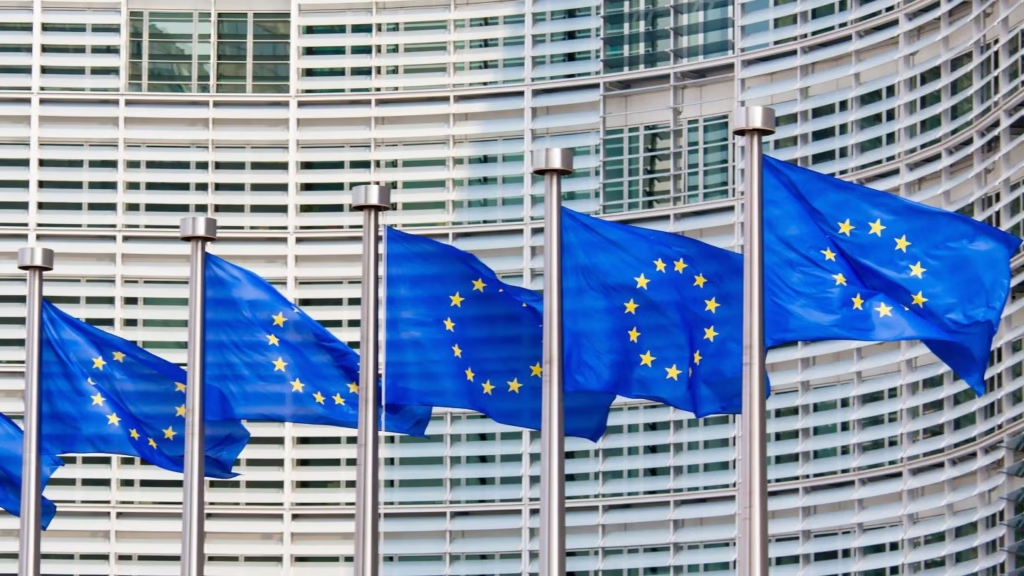
European governments have sharply criticized the reported deal, insisting that Ukraine must not be pushed into a settlement crafted elsewhere.
EU foreign policy chief Kaja Kallas
“Any agreement must include Europe and Ukraine. Peace cannot be designed without them.”
Poland’s foreign minister Radoslaw Sikorski
The victim, being Ukraine, “cannot have its ability to defend itself restricted.”
France’s foreign minister Jean-Noël Barrot
“Peace cannot be a capitulation. It must respect sovereignty and prevent future aggression.”
Spain’s foreign minister José Manuel Albares
Any peace plan “must guarantee a sovereign, democratic Ukraine” and cannot bypass the EU.
Why US Lawmakers Are Alarmed
The reports caught many congressional leaders by surprise, including senior Republicans who support Ukraine.
Sen. Lindsey Graham (R-SC)
He said he had not seen the plan and emphasized that any proposal must be supported by firm US security commitments.
Sen. Mike Rounds (R-SD) and Sen. Pete Ricketts (R-NE)
Both said they had learnt about the plan only from media reports.
The secrecy and pro-Moscow tilt of the proposal have raised concerns across Washington, especially because Trump’s previous peace efforts – including a summit with Putin in Alaska – have yielded little progress.
ALSO READ: A murder, a question — and Trump says “things happen”
Is the Plan Official?
The Trump administration has not confirmed that it is formally backing the proposal.
However, US Secretary of State Marco Rubio declined to deny the leaked demands.
Rubio said that Washington was compiling “a list of realistic ideas”. Both sides are going to have to make painful compromises if there is to be a lasting peace.
The ambiguity is fueling speculation that Trump and Putin could revive their planned Budapest summit if the talks move forward.
What Happens Next?
For now, Ukraine faces a plan that would:
- Force territorial surrender
- Shrink its military
Limiting Western aid increases Russian influence over its sovereignty Kyiv and Europe have rejected those terms before; they are rejecting them again. Washington remains divided. Moscow remains cautious. And Trump insists he can end the war — but the price of peace, according to this leaked proposal, may be one Ukraine is unwilling to pay.
FOR MORE: https://civiclens.in/category/international-news/
About the Author



1 thought on “What’s inside Trump’s secret peace plan that Ukraine and Europe are rejecting”