Parliament security tensions have intensified in recent weeks as newly implemented CISF protocols reshape how security personnel operate inside the complex, the additional scrutiny is placed on leadership, and MP complaints regarding their treatment during the investigations that were mandated as a result of security breaches. In response to increasing pressures, the CISF has adjusted its protocols by moving to consolidate the various deployment tiers for security personnel.
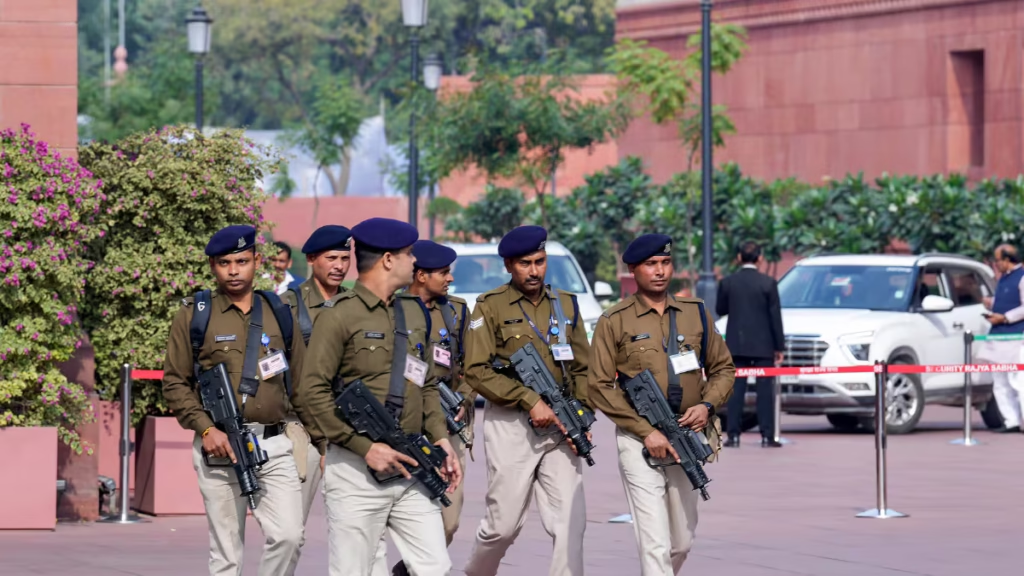
Although implementing longer deployments allows CISF personnel to develop familiarity with their MPs’ movement patterns and thus identify them with greater accuracy during the time periods of highest usage, the CISF has stated that its specialised screening of security personnel prior to their deployment to Parliament provides the best chance for competent personnel assignments to duty at Parliament. All personnel must pass psychological assessments during each deployment cycle before being assigned to duties.
Following the breaches in security during December, the Ministry of Home Affairs has expressed its support for the CISF’s new directives on security personnel and their increased timeframes for deployment. Due to the many complaints of MPs concerning increased scrutiny, DMK MP M.M. Abdulla took the initiative to announce his dissatisfaction with the number of times he had been interrogated prior to entering the Parliament complex. By bringing this to light, DMK MP M.M. Abdulla was able to bring attention to the inconsistent coordination that exists between members of Parliament and the security personnel working to protect them.
As a result of the increasing number of complaints by MPs, the CISF accelerated the phase-in of new airport-style screening methods in its core security zones, including more stringent multi-tiered verification systems, enhancing its ability to detect threats as a result of the increase in the number of infinitely more dangerous incidents.
Parliament Security Tensions Rise as New CISF Protocols Reshape Security
Parliament security tensions continue to grow as MPs question the consistency of the new CISF procedures.The political environment became much worse after an unexpected event occurred in the Rajya Sabha. Protesting Members of Parliament tried to enter the Well during an emotionally charged period of protest. Members of the CISF entered the House and stood in front of the Well to create a barrier. Opposition leaders protested that this was an overkill by the Security Forces. Their objection increased when the CISF returned to the House two additional times.
Questions arose about what constitutes a necessity for marshals and who has the authority to manage them. Longtime members of the House pointed out that marshals are typically responsible for managing situations that create a disturbance. In response to the public outcry, CISF Officials indicated that marshals were called for through standard protocol. They further indicated that since the marshals were new, there was a lack of familiarity with them by Members of the House, resulting in a misunderstanding. In the hopes of easing the situation, Officials attempted to clarify these points through their publicly released statements.
Following the incident, Mallikarjun Kharge wrote a letter to the Deputy Chairman. In that letter, Mr. Kharge expressed his concern about a member of the CISF running into the Well. The letter read exactly as Mr Kharge spoke, with strong language included.
“We are astonished and shocked at the manner in which CISF personnel are made to run into the Well of the House when the members were exercising their democratic right of protest.”
“This is most objectionable, and we condemn it unequivocally.”
Kharge argued the situation did not require such intervention. Opposition MPs supported his position during continued demonstrations.
Why enhanced protocols collide with parliamentary culture
According to the Central Industrial Security Force, the newly formed rules about the deployment of people have been established for “operational necessity”. It is explained that the individuals have had to undergo a series of multi-stage screening processes and develop their own unique and well-defined specialty training modules for their respective areas. In addition to this, examples of drills and training scenarios developed from the National Security Guard have been provided as part of the readiness for deployment.
The individuals of this new deployment rule represent a shift from the Parliament tradition that looks at maintaining minimal interference during the proceedings of the House. Former Parliamentarians have also raised concerns that an increase in security for Parliament may lead to an inability to exercise democratic expression in times of protests.
Analyses suggest that it will be challenging to maintain an appropriate balance between protecting Parliament and maintaining its freedom. These discussions are affecting the way in which the Parliament will define the security parameters of Parliament. The ultimate determination of where to draw the line will require open communication between the elected leadership (political) and the leaders (security) who are providing the support for the creation of the new deployment rules.
For more- https://civiclens.in/category/national-news-civiclens-in/
About the Author