The Winter session Parliament concluded after intense debates, overnight protests, and sharp political exchanges between the government and opposition. While there were frequent conflicts between treasury and opposition members, this was a relatively short session that produced significant results, including the passage of eight major pieces of legislation by both Houses during 15 sittings that began in early December. Parliament also commemorated the 150th anniversary of Vande Mataram, alongside debates over the government’s proposed electoral reforms.
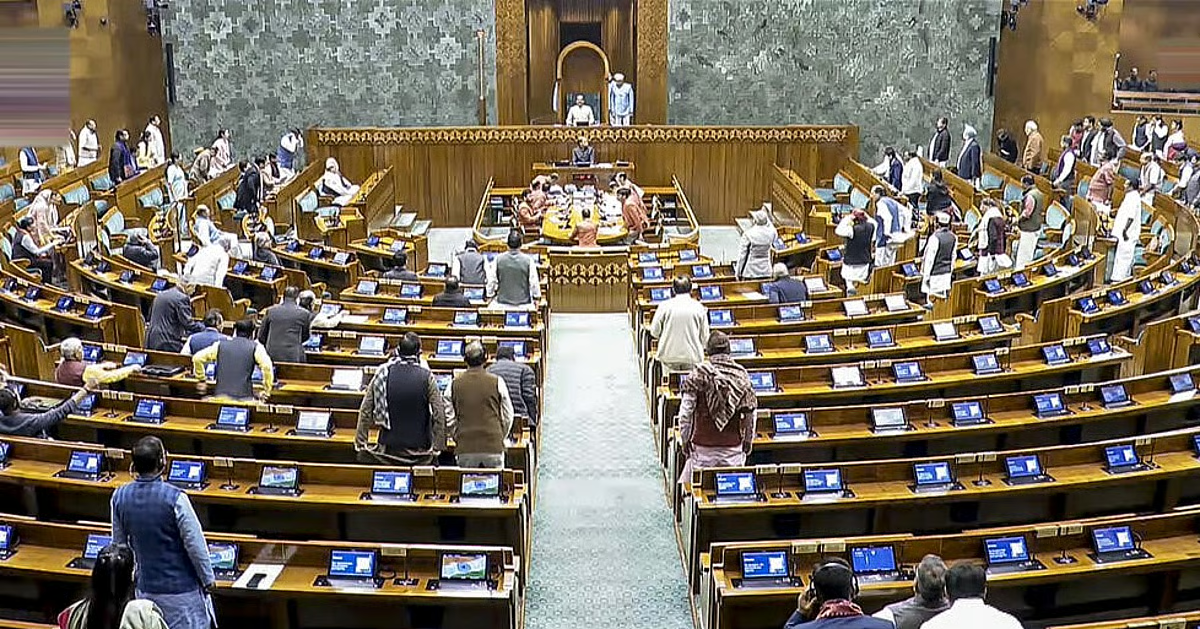
The leaders in both the Lok Sabha and the Rajya Sabha reached an agreement, which allowed for a more structured debate in the Parliament than what occurred during the monsoon session, which allowed both Houses to accomplish productivity that exceeded 100 per cent. The government pushed for a strong Financial Agenda during this session, resulting in the successful passage of four major pieces of legislation: Insurance, Excise Tax, Nuclear Energy, and Appropriation Bills. However, the opposition parties were adamantly opposed to the Viksit Bharat G Ram G Bill, and they called for a committee to review the bill before it was passed, staging loud protests against the bill during its passage through Parliament.
Parliamentary Affairs Minister Kiren Rijiju condemned the disruptions that took place during the Parliamentary proceedings, including incidents involving the tearing of papers that occurred during the debates. The debates on Pollution and Priorities of Governance were also marked by heated exchanges.
Protests and productivity define Winter session Parliament legacy
Protests from the opposition reached a high point when the Rajya Sabha continued to meet after midnight in order to approve important legislation. Both Houses did ultimately voted yes to the SHANTI Bill, which would open the door for nuclear energy companies to be private. Lawmakers also voted yes to amend the amount of foreign investments allowed in insurance companies. Parliament also passed an amendment allowing for higher excise tax rates on tobacco and similar products. The two Houses were also able to discuss suggested changes in funding for grants in the next fiscal year. Parliament had sent the Securities Markets Code Bill to a standing committee for consideration as well.
During a discussion on the electoral reform and the heritage of the nation, both Lok Sabha Speaker Om Birla and Rajya Sabha chairman C. P. Radhakrishnan expressed their happiness at the number of participants who participated in the discussion, although both were critical of some behaviour that they believed did not coincide with natural decorum. C. P. Radhakrishnan expressed regret over the behaviour he witnessed during this session, but thanked everyone present for continuing to show up even when there were disruptions. He asked all lawmakers to honour their responsibility to uphold democracy through constructive debate.
Later during the same session, Rijiju accused the opposition of continuing to block the debate on the subject of air quality. However, Congress leaders refuted that accusation by laying blame for the frequent adjournments on the sudden by Speaker. Even with these disagreements, the minister was of the opinion that the session had successfully advanced towards achieving the Viksit Bharat vision through legislative reforms.
For more- https://civiclens.in/category/national-news-civiclens-in/
About the Author



1 thought on “Winter session Parliament ends with key bills amid protests”