The Rahul Gandhi disqualification motion has escalated tensions in Parliament, triggering fresh political confrontation between the BJP and the Opposition. Rhetoric turned to procedure when a formal motion was made to formally target the Opposition leader of the House for action, escalating the tensions that were already palpable within the Parliament this week, particularly after heated debates over the new trade deal had caused significant friction throughout the week. Now, procedural tools are contributing to escalating the political conflict. A BJP Member of Parliament initiated additional actions by putting a motion on notice for the cancellation of Rahul Gandhi’s membership and a further motion seeking a lifetime disqualification from being an electoral candidate.
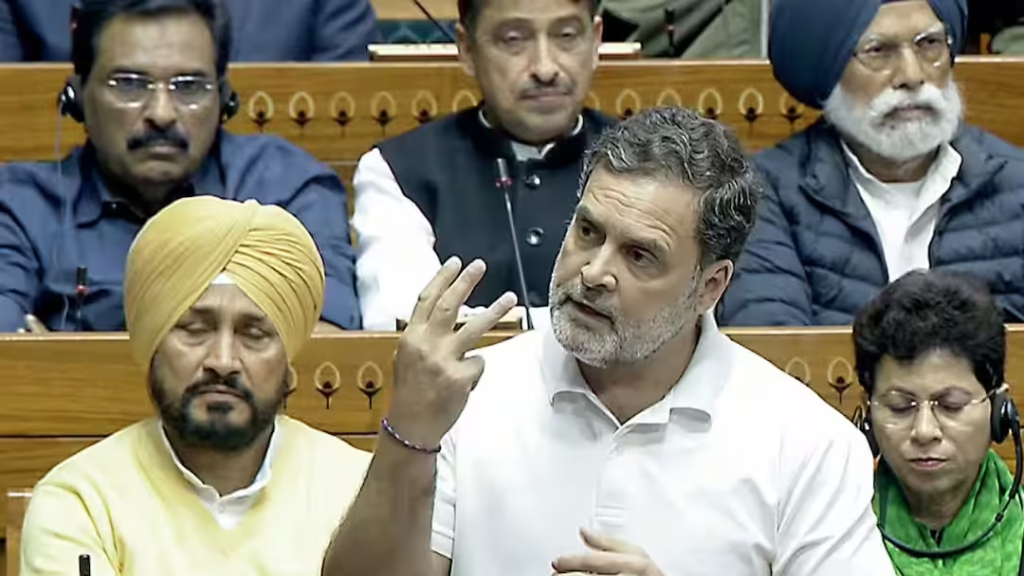
The House erupted in response to the announcement of this motion during Zero Hour, resulting in heated protests that caused the Speaker to adjourn the House. Additionally, the controversy has deepened the partisan rift between the government and opposition parties through very sharp accusations from both sides regarding the actions of the other. The dispute now moves into a phase of review under procedures. The parliamentary rules will provide the direction/procedure to follow for further action.
What the substantive motion demands
Nishikant Dubey presented a substantive motion against Gandhi with the allegation that he cooperated with anti-Indian elements. He stated, ‘I do not have a privilege notice. I have submitted a substantive motion that he has allegedly been engaged with the Soros Foundation, Ford Foundation, USAID, has travelled to Thailand, Cambodia, Vietnam, or other places to meet or to listen to people who are also associated with anti-India elements, and that he has met with anti-India elements when he has gone to those places.
As such, I demand that his membership be revoked and that he be disqualified from holding office for life.’ He claimed that Gandhi was abusing his position in the Parliament to make accusations against him. The notice also claimed that Gandhi was responsible for undermining institutions created under the Constitution. A substantive motion must be debated and voted on by the members of Parliament. The Speaker needs to first approve the proposal for a substantive motion before the motion can be considered. Voting is permitted by the provisions of Rule 342 of the House Rules.
Opposition Response to the Disqualification Motion Against Rahul Gandhi
Rahul Gandhi made disparaging remarks about the recent trade agreement. Some of his comments were deleted from the official record of his speech. Minister Kiren Rijiju, who brought the motion of privilege against Gandhi, later refused to take action as a result of the announcement from government sources that no such action had been taken. K.C. Venugopal openly rejected the motion for privilege against him and stated, “We do not care about motions and will be willing to accept any punishment.” In an attempt to question the deletion of comments during the proceedings, he stated that the Chair had treated him unfairly by deleting these comments.
The opposition insisted on an open discussion of the privilege motion. Imran Masood, for his part, suggested that the privilege motion could be heard before the actions taken against those people who violated the laws related to privilege motions. The conclusion of Mr. Chairman’s consideration of the privilege motions is likely to be a key factor in how much more confrontation will occur between the political parties in this parliament.
For more- https://civiclens.in/category/national-news-civiclens-in/
About the Author


