Tata Sons’ leadership delay exposed an unusual level of uncertainty inside Bombay House, where continuity is typically treated as procedural certainty. An extraordinary level of uncertainty arose at Bombay House. Tata Sons had intended to ensure that their leadership change was seamless, but questions disrupted the assumed continuity and internal alignment of the event. This led to discussions about replacing what would typically have been considered procedural certainty. Rather than confront the disruption, N Chandrasekaran requested that the issue be deferred until a broader consensus could be developed.
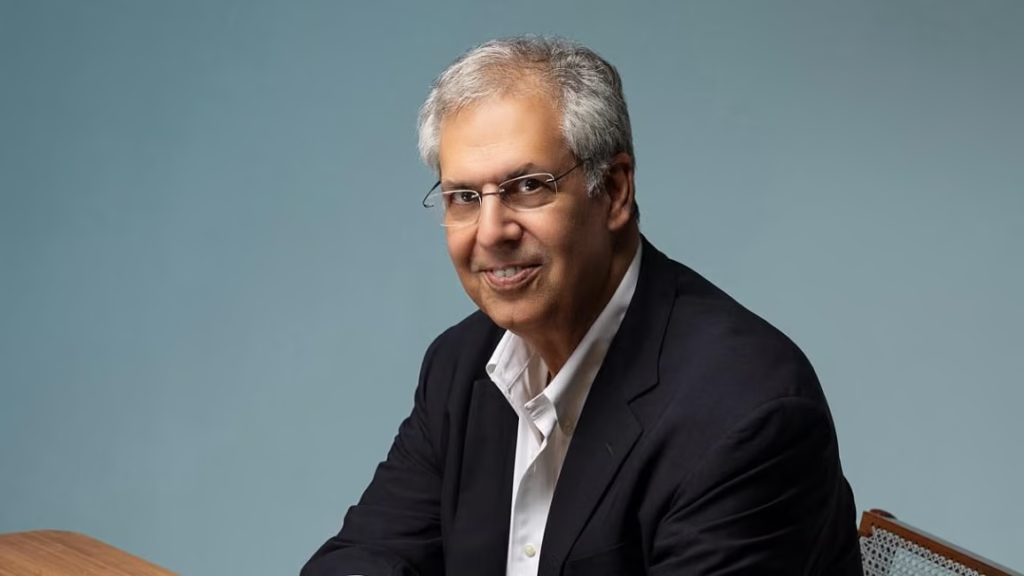
His behaviour also mirrored the traditional approach taken by Ratan Tata. During this time, observers began to see a greater level of scrutiny regarding the processes employed by the Board and, therefore, the additional meanings attached to the deferral had symbolic implications that went beyond simply the tenure of the current leadership. The discussions regarding the additional meanings attached were taking away from the leadership continuity that formerly was focused on, and renouncing the authority of the Board. The focus concurrently began shifting toward preparation for the June Board Meeting.
How losses and conditions shaped board resistance during the Tata Sons leadership delay
Noel Tata raised several questions as to why there had been three deferrals; these included whether some of the group’s many unlisted enterprises would report large losses and raise concerns about debt accumulation and ability to contain them, as Air India had just reported significant consolidated losses, and Tata Play/Tata Digital had continued to report cumulative deficits. It is difficult to gauge how BigBasket will fare in this environment, considering the level of competition from quick-commerce providers; thus, Noel Tata looked for some assurances before extending support. Chandrasekaran advocated deferring to maintain the group’s cultural spirit of consensus. Of the four board members who were reported to be in favour of extending his term, the final decision would need to adhere to the group’s principle of unanimity.
What listing debates and June talks could decide
The listing of Tata Sons came into the spotlight once again for other sensitive reasons. Reportedly, Noel Tata had strongly opposed a public listing (IPO) of the Tatas. Apparently, Tata Sons has since applied to the RBI to cancel its NBFC license. A lot of people see this as an attempt to avoid listing requirements. Others on the board are arguing that it is ultimately up to the regulators to make that determination. If the stock were to be subsequently listed, it would result in the company being subject to very strict disclosure requirements and much more scrutiny from the markets.
At the same time, the Shapoorji Pallonji group continues to call for clarity about the listing from the Tatas. Currently, the Tata Trusts hold 66% of the company. Chandrasekaran’s current term will expire in February of 2027. Insiders believe that this will be resolved soon and that “This is a matter that needs to be resolved before the June meeting; given how important Tata Sons is to the Tata Group as the source of the group’s strength, it cannot remain unresolved without negatively impacting the stability of the overall group,” said a Tata Group insider.
For more- https://civiclens.in/category/category-business-economy/
About the Author


