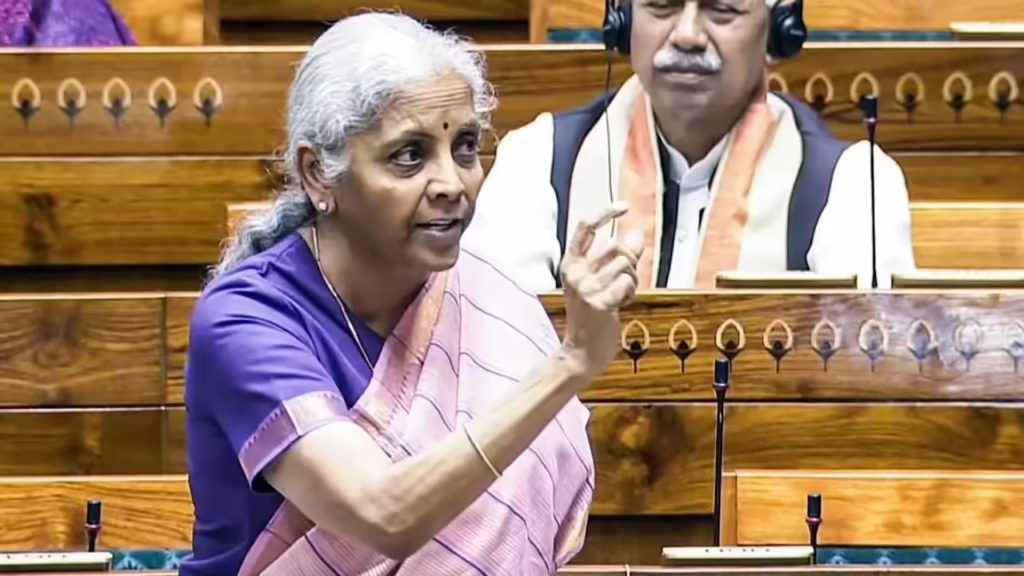
The CAPF Bill has triggered a political standoff in the Rajya Sabha, highlighting tensions over both procedure and policy. Before formally introducing a major security reform initiative, efforts to do so were thwarted by the opposition’s disruptive protests during the early stages of the Rajya Sabha, when the government intended to present a critical piece of legislation known as The Central Armed Police Forces Bill. Lawmakers objected to the listing’s procedural failings, effectively delaying the introduction of the Bill until further notice. The disruptions showcase a larger underlying political and institutional divide than just the Bill itself; opposition members also challenged the legitimacy of both the process and the substance of the proposed reforms, whereas government leaders sought to advance an agenda of organisational reform.
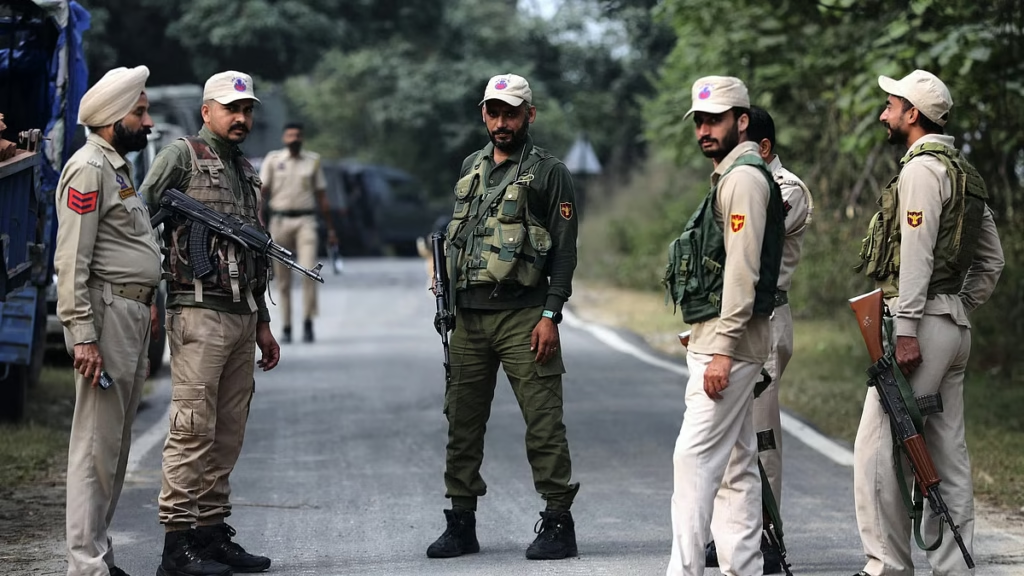
The intent of the Bill is to consolidate several different central police forces (CRPF, BSF, ITBP, SSB and CISF) into one organisation that, when consummated, will provide India’s central government with the foundation of India’s domestic security system. The significance of the proposed reforms has far-reaching administrative implications; however, the timing of the proposed introduction and procedural compliance were the causes of the near-immediate confrontations between government and opposition members who objected to one another. The conflict escalated rapidly in the House, prompting government leaders to attempt to restore order in the House.
Opposition cites procedural lapse, forces temporary halt
Before the introduction of the bill, opposition parties expressed objections about the timing of the circulation of the bill. Legislative rules require 48 hours of notice. The Trinamool Congress led the opposition protest in the House. Derek O’Brien, MP formally raised the issue of adherence to established parliamentary procedures, and many other parties supported the objection immediately. Congress, AAP, and CPI(M) joined together in protest, and the opposition members made a coordinated walkout. They claimed that the government was trying to rush through legislation without adequate time for review; therefore, the government agreed to hold off on the bill for now. The leaders wanted to avoid further disrupting the legislative process, so Home Minister Amit Shah quickly began consulting with opposition leaders to build a consensus on how to proceed. At the same time, NDA floor leaders were also holding parallel meetings.
CAPF Bill Provisions and Deputation Row Intensify Political Friction
The bill aims to create a single administrative structure to improve the hiring process and the terms of employment for police officers. The bill includes provisions that will allow for the formal assignment of police officers to senior positions. The proposed quotas created significant controversy amongst many interested parties. The proposal allocates fifty percent of Inspector General positions to police officers. The same percentage will apply for the position of Assistant Director General as well, and all Inspector General and Assistant Director General positions will be filled from within the police service.
As a result, police officer associations believe that there is little potential for career advancement for an Inspector General or an Assistant Director General. Leaders from opposing parties claim that these changes have reduced the morale of police personnel and question whether they comply with previous court orders regarding the use of the police service. The proposed law also tries to formalise current practices.
The committee charged with overseeing the business of the House has already allocated time for debate on the bill. However, unless leaders reach a political consensus, Parliament may not debate or vote on the bill. Thus, continued discussion among all parties will determine what will happen next with the bill.The future of the CAPF Bill will depend on whether the government and opposition can reach a consensus on both procedure and reform.
For more- https://civiclens.in/category/national-news-civiclens-in/
About the Author