Bangladesh received a supply of diesel from India because it had been having difficulty obtaining enough fuel. Approximately 5,000 metric tonnes of diesel were delivered via the Friendship Pipeline, which transports fuel from Numaligarh Refinery Limited in Assam, India. According to the officials, this was just a regular energy trade between India and Bangladesh.
Recently, however, escalating regional tensions have raised concerns about fuel availability in Bangladesh, prompting the government there to seek additional oil from India to meet its fuel demand. An Indian official confirmed to the news agency that Bangladeshi officials approached them about obtaining more fuel. However, India is going to put its own needs above all else, and therefore, it is expected that any additional requests from Bangladeshi officials for oil will be considered carefully.
How the India-Bangladesh Friendship Pipeline improves fuel logistics
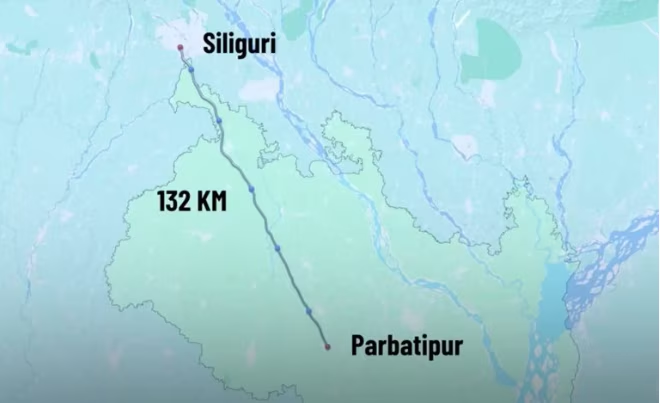
Diesel flowed from India over the India-Bangladesh Friendship Pipeline network between the two nations, where it connected Siliguri (in India) with the Parbatipur Depot in Bangladesh. This pipeline allows officials to pump around 100 tonnes of diesel per hour; therefore, it took approximately 45 hours for the total amount of diesel to be transferred through this system.
With this infrastructure, fuel can be transported directly and more efficiently than before, when Bangladesh used railways for delivering tankers of fuel. Thus, the use of this pipeline will reduce the time and money spent on logistics associated with fuel movement. Additionally, this system can transport around 200,000 tonnes of fuel each year. India has an existing agreement to provide Bangladesh with regular volumes of diesel, with a total annual commitment for diesel currently at about 180,000 tonnes.
Energy crisis increases Bangladesh’s dependence on imports
Due to the ongoing conflict, Bangladesh is experiencing significant energy shortages. The country imports most of its energy supply, with diesel making up approximately 70% of total demand. Consequently, many supply disruptions raised concerns among the public. Authorities encouraged the public to limit non-essential travel, and many individuals began panic-buying at fuel stations as a result of their newfound anxiety surrounding energy shortages.
At the same time, the city of Dhaka is looking for alternative sources of energy; however, India will continue to be a significant partner during times when Bangladesh experiences an energy shortage. Indian officials have indicated that they will support Bangladesh in meeting its energy needs. According to one Indian diplomat, “Bangladesh is a very important friend,” and therefore, while there is a lot of uncertainty in the region, collaboration with Bangladesh will continue.
For more- https://civiclens.in/category/national-news-civiclens-in/
About the Author