India-EU car tariffs mark a major policy shift as New Delhi cuts duties on imported luxury vehicles under the new trade agreement with Europe. As a result of finalizing the trade agreement between India and the EU, India will be making significant tariff reductions on luxury automobiles imported from Europe. The immediate tariff reductions reflect an overall shift in India’s trade policies in response to increasing global economic uncertainty and a desire to improve trade performance in general. Automakers expect India-EU car tariffs to reshape competition in the premium segment.
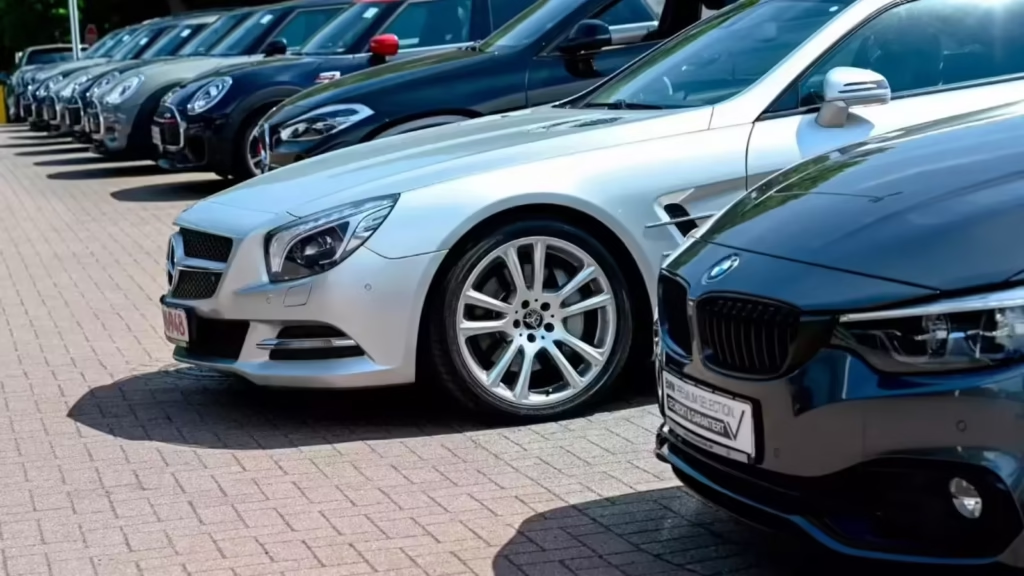
As outlined in the trade agreement, the governments of India and the EU will be cutting tariffs for many product categories, and automobiles have been identified as a primary area of focus because they represent both a sensitive area of trade and also an important strategic sector for India. India is currently the third-largest market in the world for automotive sales, but for many years, the high tariff rates charged on imported luxury automobiles kept their market penetration at very low levels (less than 1% of total passenger vehicle sales).
However, as consumers’ incomes continue to rise, consumer preferences for premium goods, in general, are becoming much more widespread throughout India, and premium automobile companies have been tracking that trend closely, with many pointing to tariffs being the largest barrier to their entry into the Indian automotive market. The new tariff framework established as a part of this trade agreement reflects a controlled process of market liberalization, allowing for a more open trade relationship, without creating too much disruption to the domestic manufacturing base in India. This equilibrium is the primary driver for the automobile provisions included in this trade agreement.
How India plans to implement India EU car tariff reductions
India has decided to reduce the import tariffs on premium petrol cars, effective immediately, and has reduced the tariffs on cars priced from 15,000 to 35,000 euros with a flat 35% tariff. Cars priced over 35,000 euros will be subject to a 30% tariff. The government has set caps on total annual imports for each price segment and will phase in combined quotas at a gradual rate of 10 over the next ten years. It is anticipated that the tariff on all imports will be reduced to 10% by the end of this period. The largest reductions in import tariffs will be on higher-priced vehicles.
Electric vehicles and safeguards for domestic manufacturers
EV tariffs will be postponed willingly by India. Electric vehicles, after 5 years, will be eligible to receive reductions. The price cap of €20,000 will ensure that vehicle imports stay competitive with domestic manufacturers.
Gradually, duties on EVs will reduce to a maximum of 10%. Eventually, there will be larger quota amounts for imported electric vehicles. Manufacturers expect to see an increasing number of model choices in the future. Manufacturers are also looking forward to better technology and supply-chain consolidation resulting from the growing number of electric vehicle imports.
For more- https://civiclens.in/category/category-business-economy/
About the Author