India increases its readiness as the India-Iran air crisis disrupts air travel, forces route changes, and heightens evacuation concerns for citizens in the region. With the development of Iran’s instability, India monitors Iran’s developing instability with a sense of urgency. Due to the immediate closure of Iran’s airspace and the immediate alarm of regional effect, airlines scramble to find safer means to fly through the western Asian region. As tensions across provinces develop, Students are in contact with their embassy officials. Protests grow in size and intensity throughout the entire country of Iran, while President Trump threatens to attack via airstrikes. Iran has stated that it will retaliate and will prepare for war if provoked. There is an increasing tension resulting in increased risk as events unfold quite rapidly.
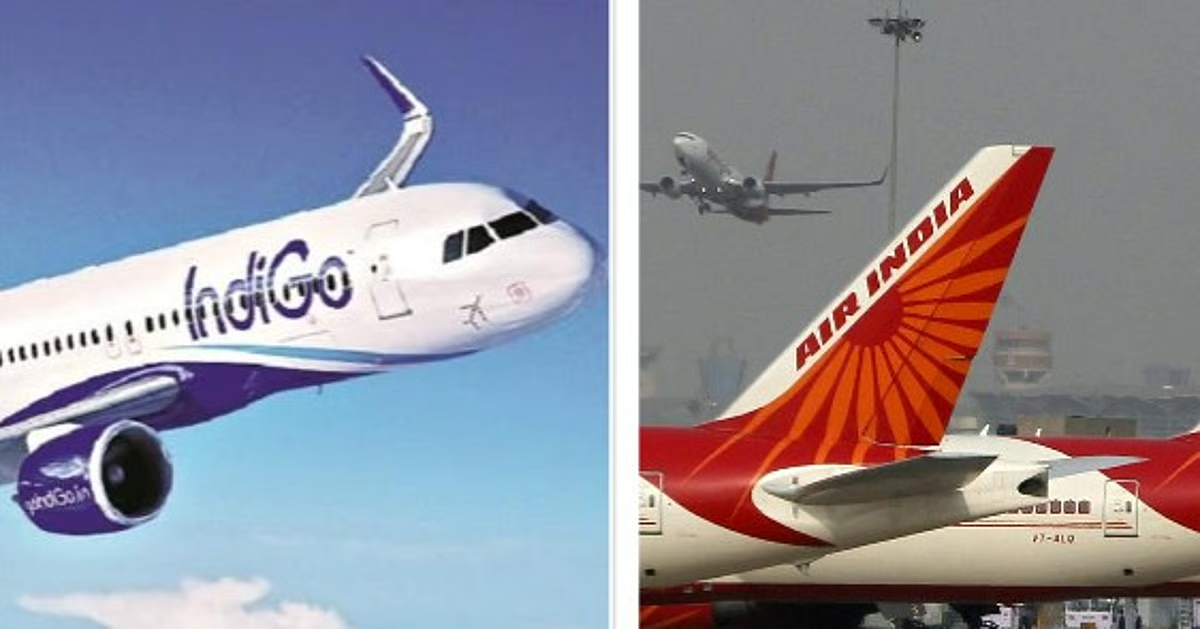
The Government of India is making contingency plans for its citizens in Iran, while officials continue to work with Indian students in both Tehran and Qom until they can be evacuated. Embassy personnel are collecting all documents from the students to ensure that they have all the relevant information. Air India has changed the routes of its aircraft to fly to longer routes, while IndiGo is modifying its schedules to accommodate the new routes, while assessing new limits of operation. Both airlines are stressing that safety continues to be their number one priority while also informing all affected travelers of the potential delays. Indian authorities relate all decisions related to students and other travelers directly to the current unrest within Iran.
India adjusts evacuation readiness as air routes change amid India Iran air crisis
To mitigate risk, Air India has narrowed their airspace to avoid flying over Iran. As a result, planes must take more circuitous routes, which adds additional costs to fuel. Because of the increased amount of fuel, crews also must fly less weight on the aircraft in order to maintain necessary safety margins. A few flights have had to return mid-flight because of unforeseen notices from authorities. An A350 plane had to be diverted after losing two engines during foggy conditions while taxiing for take-off.
IndiGo Airlines suspended its CIS flight operations due to longer-distance flying. Resource teams evaluate every departure route before granting approval for pilots to depart. Nasir Khuehami met with students to outline evacuation procedures. He stated that there are currently “no evacuation orders in effect”. Embassy personnel remain in contact with Indian contingency groups. Minister Jaishankar has spoken with his counterpart, Deputy Foreign Minister Araghchi, to review the current status. The Government of India has advised all citizens to cease non-essential travel immediately. All governmental agencies make their decisions based upon safety factors, as well as providing clear communications to the public. Students receive daily updates via the embassy.
India balances diplomacy and protection as tensions rise
Last month, the protests that began due to the collapse of Iran’s currency now cover a broad area of the country. Protesters want reforms, while security forces crack down on the demonstrations. Trump has threatened Iran with “strong action.” Iran has responded by stating that it is ready for war with the U.S. In light of this, U.S. bases across the Middle East are preparing for retaliation. India has stepped up monitoring their citizens’ movements to ensure their safety. Authorities have created contingency plans to streamline their responses to changing circumstances in Iran and the Middle East.
For more- https://civiclens.in/category/international-news/
About the Author




1 thought on “India-Iran air crisis : Tensions Disrupt Flights and Trigger Evacuation Plans”