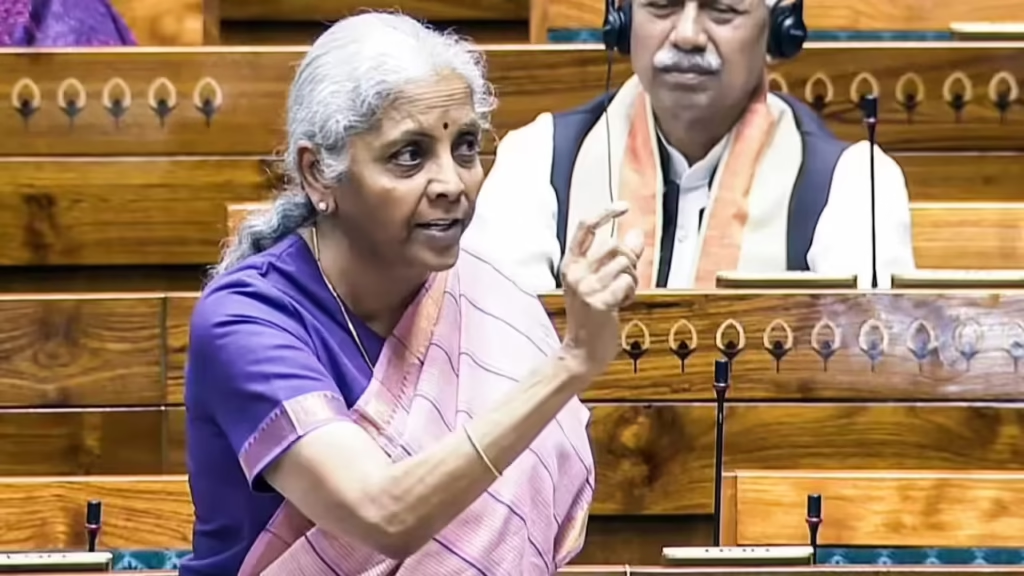
Parliamentary sessions often expose more profound fiscal concerns. Heated disputes sometimes hide crucial economic decisions that are happening concurrently. Recently, though, key financial approvals were given to lawmakers. Additionally, the Lok Sabha approved important supplementary demands for grants. This also allowed the Government to receive additional approval for more spending. This decision was made amidst protests and political clashes. Many opposition members were repeatedly disruptive during the proceedings in the House. Regardless, legislative business progressed during times of heated debate. Finance Officials have been careful to explain their spending adjustments.

The explanation is that fiscal stability continues to be their foremost priority. Global economic uncertainty is also affecting domestic economic planning. Policymakers are identified as attempting to maintain their financial flexibility. The supplementary demands include additional measures related to overall fiscal management. Finance Minister Nirmala Sitharaman discussed the stabilisation mechanism developed to protect India from global shocks. Lawmakers also discussed the issue of institutional accountability during the same time. Submitted by opposition members, the notice pertained to removing the Chief Election Commissioner, Gyanesh Kumar.
Supplementary Grants Expand Government Fiscal Flexibility
Supplementary demands were passed by the Congress-led coalition government in the Lok Sabha by way of a voice vote to permit as much additional government spending as possible through FY26 as requested by the government amounting to ₹ 2.81 lakh crore; but some offsetting adjustment would be made from non-tax revenues on total expenditures resulting in an estimated net of ₹ 2.01 trillion in net expenditures for FY26, with approximately ₹ 80 billion in additional non-tax revenues on total revenues for FY26.
As addressed by the Minister of Finance during discussion of the proposed total expenditure; Responding to members’ concerns; as well as reiterating that existing estimates should not differ from current estimates, she expressed “There is no increase in expenditure beyond the BE of 2025-26 due to the second supplementary,”
As it relates to the previous budget deficit amount of 4.4% of GDP; there is no change in any current year-to-date budget deficit numbers between actual, revised & projected. Hence, the revised estimates have slightly reduced total government expenditures for the current year.
Political tensions accompany financial approvals in Parliament
The presence of political controversy within parliaments was obvious during the first part of this sitting through the disruptions that occurred multiple times. Regardless of these interruptions, however, lawmakers managed to eventually approve legislation for appropriations to provide expenditure from the consolidated fund. There has also been increased pressure from opposition Members of Parliament (MPs) on issues of institutional accountability; the number of signatories to a member’s notice against the Chief Election Commissioner (E.C.C.) exceeds 190 across both Houses.
Furthermore, prior to this occurring there was already an increase in tensions amongst MPs who are part of the ruling coalition when discussing grants for organisations, as demonstrated by the public confrontations between Rahul Gandhi and Speaker Om Birla when discussing a supplement spending bill on the House floor.
On another note, Government is confident they will be in good economic position given uncertainty with Global Economies. The Minister of Finance, Nirmala Sitharaman has made plans to create an Economic Stabilisation Fund of approximately Rs One Lakh Crore. This fund will provide government with fiscal flexibility to respond properly to possible future global disruptions as may occur. The approval of supplementary grants highlights Parliament’s attempt to balance fiscal flexibility with economic stability amid political tensions.
For more- https://civiclens.in/category/national-news-civiclens-in/
About the Author