Finally, after months of anticipation, both India and the UK are now ready with specific timelines for the implementation of an economic pact that has been in the works for several years. The two nations are now focusing on trade recalibration and operational rollout beginning in April. The new trade agreement will offer different opportunities to exporters and manufacturers as they follow the final stages of approval for the trade agreement.
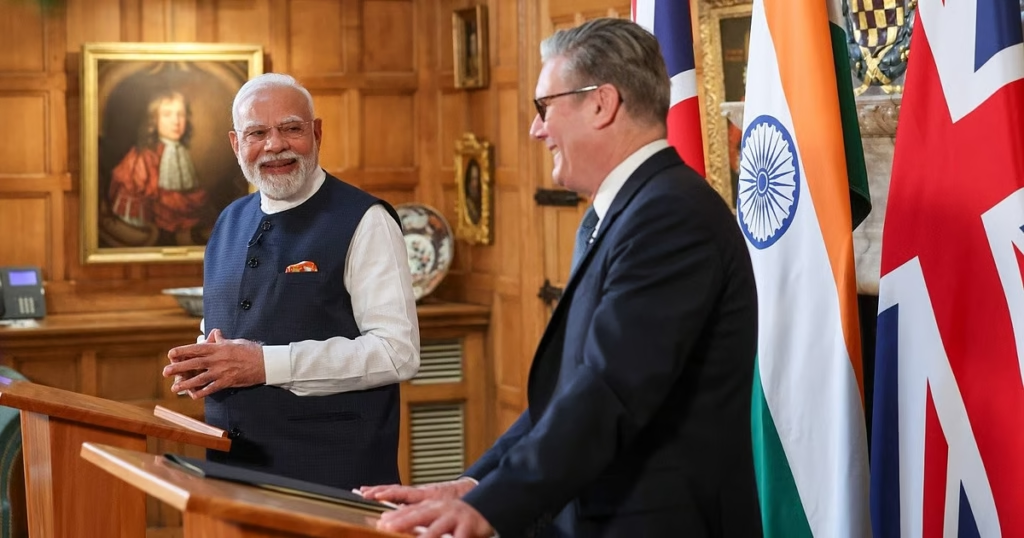
Both governments are confident of a significant economic impact as a result of this trade agreement, and the business community is also optimistic about greater certainty to engage in trade and to access new markets. Trade officials are referring to the agreement as transformational and covering goods, services, and labour mobility, while providing a stronger foundation for engagement between two of the world’s largest economies. With all the work now completed, the legislative bodies of both countries will receive attention as all timelines appear increasingly firm.
What The Agreement Changes For Trade And Tariffs
The agreement allows almost entirely duty-free Indian exports. Ninety-nine percent of all shipments to the UK are now free from duties. Textiles/jewellery/footwear/toys will benefit greatly from this agreement. The India-based exporters will gain a competitive advantage in the UK market due to this agreement. Additionally, India will cut tariffs on select UK products. The automobile industry and Scotch whisky are among those product categories most impacted, particularly in terms of a reduction in whisky duties when the agreement takes effect.
The rates for whisky will continue to decrease over the next ten years. Tariffs on automobiles will also be reduced according to a quota-based system of trade. There is also a reciprocal expansion of access to electric and hybrid vehicles between India and the UK markets. India’s imports of all consumer goods will also be liberalised under this agreement. Chocolates/cosmetics/biscuits will enter a liberalised regime. The agreement establishes an objective of doubling trade volumes by 2030, and current trade between India and the UK is about 56 billion dollars. The trade agreement will alter the conduct of commercial transactions between India and the UK.
Approval Process and Economic Impact of the India-UK Trade Pact
The ratification process in the UK Parliament is a major requirement for implementation. Both Houses are currently debating this item. The review and recommendations of the Committee will assess the legal and sectoral implications of this matter. The federal cabinet must also grant its approval. There are also hopes for the agreements to be implemented at the same time as other related conventions.
Temporary workers are protected under the Convention on Double Contributions; their payments will not be double-deducted from their social security payments. Together, the conventions are meant to enhance the mobility of labour (workforce mobility). UK officials claim this is a precedent-setting agreement. Indian policymakers are giving importance to the market opening of both countries.
When ratified by both countries, a mutually agreed implementation date will follow the ratification process. Businesses are planning their supply chains to facilitate commerce between both countries. The agreement will further strengthen the bonds between the two leading world economies. If implemented in April, would be a pivotal moment in resetting the world’s trading network. Once implemented, the India-UK trade pact is expected to redefine bilateral commerce, supply chains, and long-term market access for both economies.
For more- https://civiclens.in/category/national-news-civiclens-in/
About the Author



1 thought on “India UK Trade Pact Nears Rollout, Big Tariff Shifts Ahead”