Cities and infrastructure in Ukraine are targeted with overnight strikes, heightening the conflict and prompting calls for tougher air defense among Kyiv’s allies.
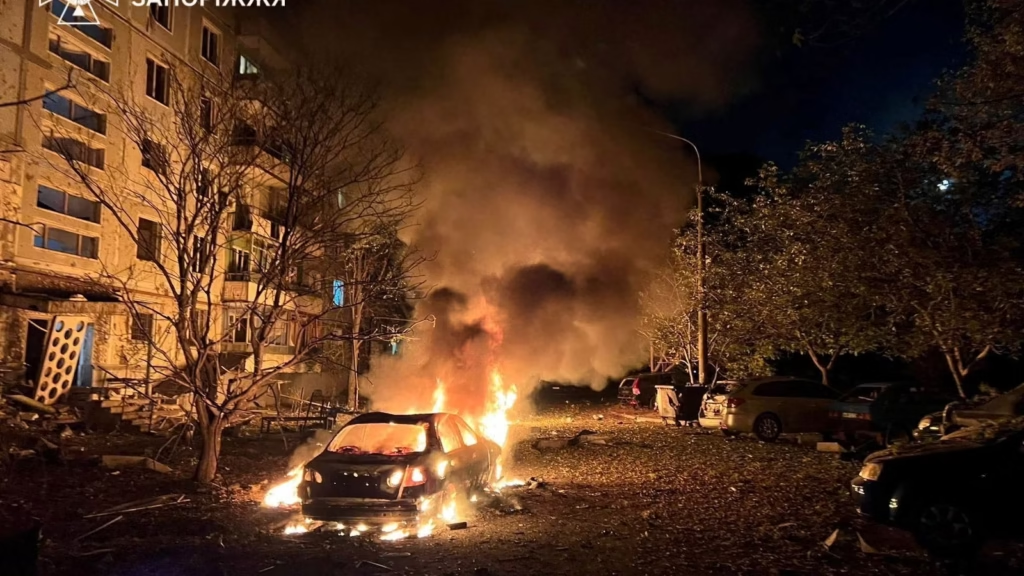
In one of the biggest aerial bombardments since Russia began its all-out invasion, Moscow staged a coordinated overnight bombing campaign across Ukraine on Sunday,killing a minimum of five civilians and wounding dozens more. Ukrainian authorities stated that the Russian strikes hit civilian infrastructure, again heightening tensions in the conflict.
Russia launched 53 ballistic and cruise missiles and used almost 500 drones against nine regions, Ukraine’s Air Force reported. President Volodymyr Zelensky stated that the strikes were “a deliberate campaign to weaponise the weather” by disabling the nation’s power and gas infrastructure in preparation for winter.
Mass Attacks on Lviv and Zaporizhzhia
The historic city of Lviv, previously regarded as a safe haven, suffered its largest attack since the start of the war. Maksym Kozytskyi, head of Lviv’s military administration, reported that four people, including a 15-year-old, died in a combined drone and missile strike. The attack injured six more people and cut two districts off power.
Mayor Andriy Sadovyi described the attack as interrupting public transportation for hours and destroying a civilian business center on the outskirts of Lviv. “This was not a military installation,” he emphasized, pointing out that the attacks targeted deliberately civilian life.
In Zaporizhzhia, a key southern city to Ukraine’s industrial backbone, a distinct air attack killed a civilian woman and injured nine others, including a teenager. Strike damaged residential housing and cut electricity to nearly 73,000 homes
Slovyansk in eastern Donetsk also came under intense shelling, with a guided aerial bomb hitting an apartment building, wounding six, including a child. The attack caused damage to nearly two dozen residential buildings along with cars and cafe.
https://www.bbc.com/news/articles/czjvlgzmp4wo
Ukraine’s Energy Infrastructure Under Siege
Naftogaz, the Ukrainian state-owned oil and gas group, confirmed Sunday’s assault caused “large-scale damage” to gas infrastructure, only two days after the largest Russian bombardment of the war on energy assets. Zelensky demanded quick Western assistance to push back against “Russia’s aerial terror,” calling for the swift transfer of air defense systems to defend against such attacks.
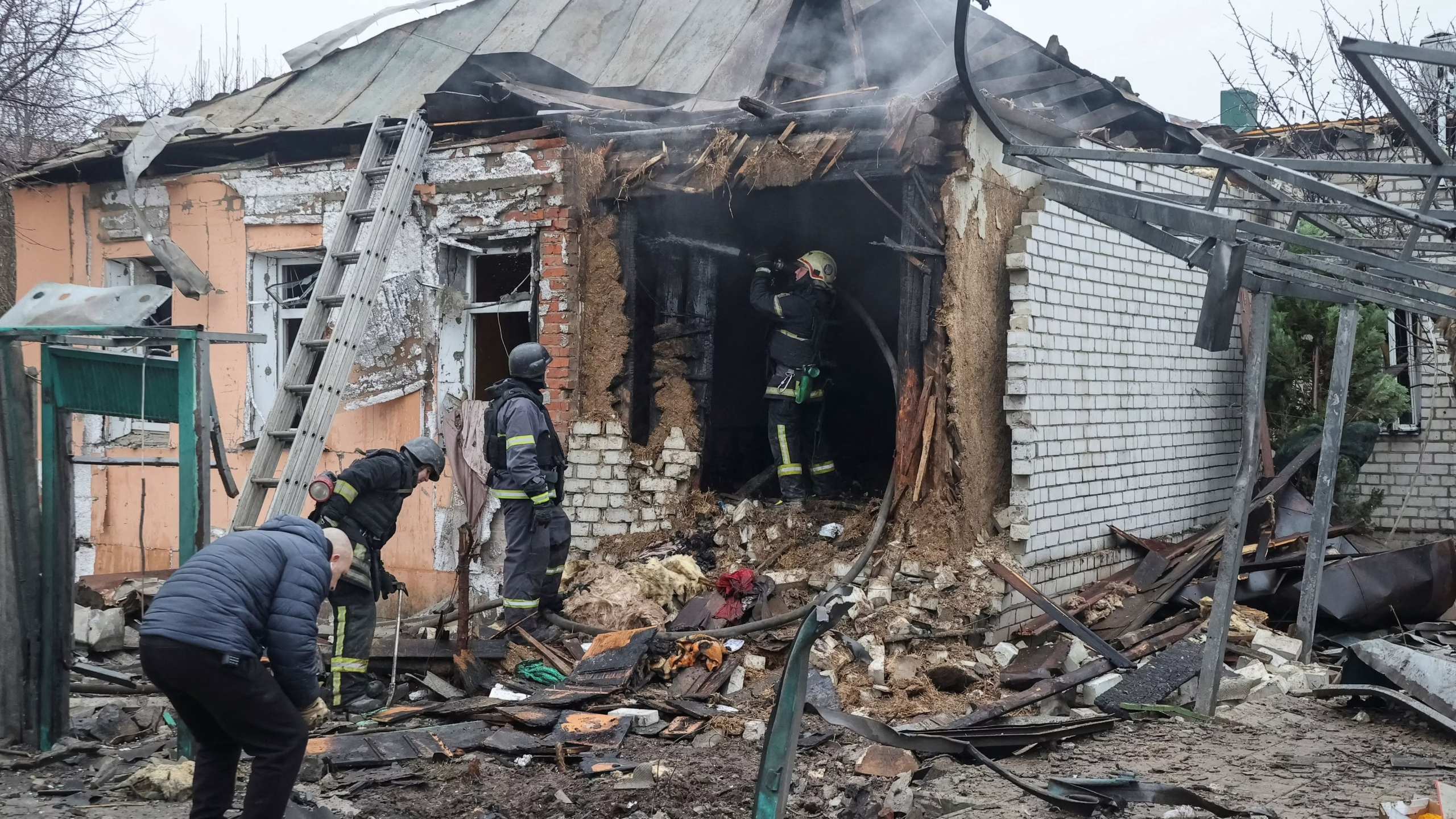
“Today Russia struck everything that makes human life go — gas, electricity, heat. We need to make air defence stronger now,” Zelensky wrote on Telegram.
Since the conflict began, Moscow has sought to cripple Ukraine’s power grid and rail network — crucial for civilian life as well as military supply chains — increasing strikes as winter nears. Ukrainian officials say the Russians are trying to undermine morale and compel to concessions.
Growing Regional Fears
Poland and the member states of NATO responded with increased alertness. Poland scrambled fighter jets after Russian drones moved close to the Lviv area, sparking fears of airspace incursions. Germany also witnessed drone sightings near airports and military installations, spurring aconcerns of cross-border attacks.
Putin’s Threat to the U.S.
Russian leader Vladimir Putin recently cautioned that providing long-range weaponry, including U.S. Tomahawk cruise missiles, to Kyiv would increase the conflict and damage U.S.–Russia relations. Putin described such actions as a “qualitatively new stage of escalation,” in response to U.S. policy changes and remarks by President Trump favoraing Ukraine regaining lost territories.
FOR MORE : https://civiclens.in/category/international-news/
About the Author