Pakistan and Saudi Arabia Sign Mutual Defence Treaty: Regional Security Realignment
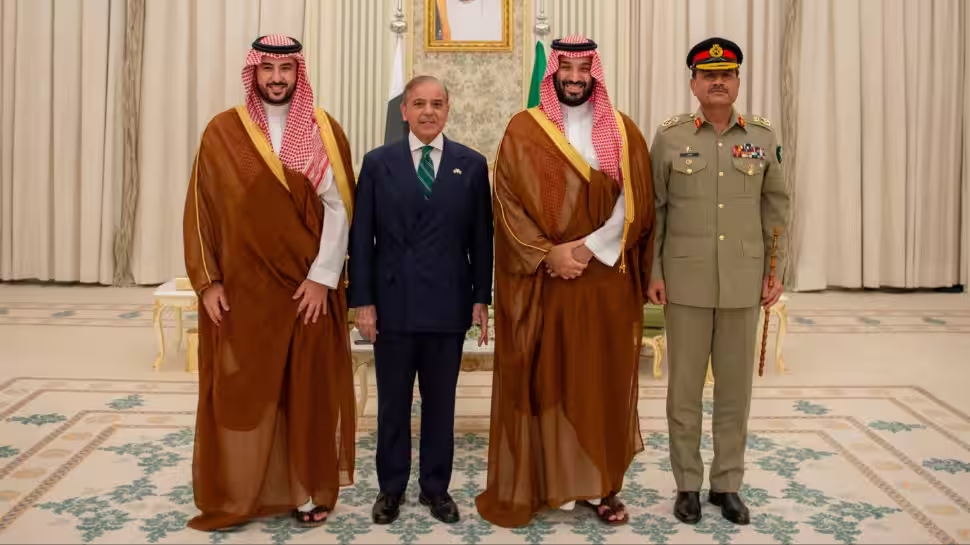
In a first-of-its-kind effort, Pakistan and Saudi Arabia have signed a Saudi–Pakistan defence treaty, formally called the Strategic Mutual Defence Agreement (SMDA). The pact commits both nations to treat an attack on one as an attack on both, reshaping the Middle East and South Asian geopolical landscape. The treaty is the strongest security pact between the two allies so far and can redefine the Middle East and South Asian geopolitical landscape. The decision is highly consequential because Pakistan has nuclear weapons.
The Treaty and Its Clauses
The pact commits Pakistan and Saudi Arabia to defend each other in an event of war. Although the agreement has not put out a very specific public announcement of what the pact is, Pakistani officials stated that the pact involves “all available military means” The term itself is significant.
Turning points are:
- Mutual defence clause: Any attack on one will be considered an attack on both.
- Enhanced cooperation: Joint training, intelligence sharing, and military exercises.
- Strategic deterrence: While nuclear support is not explicitly mentioned, ambiguity remains over whether Pakistan’s nuclear deterrent could indirectly extend to Saudi Arabia
Historical Context
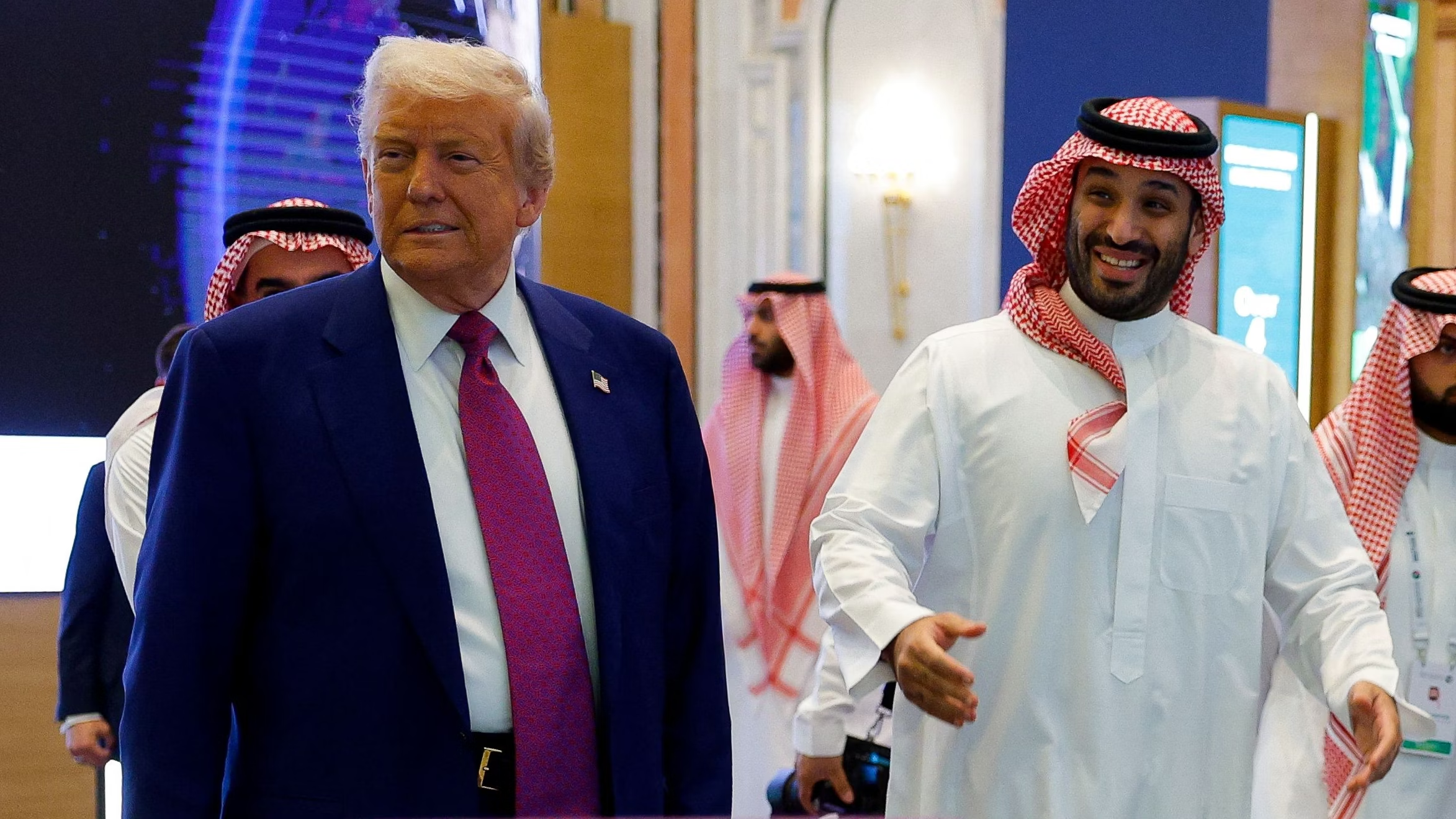
Dozens of security agreements bind Saudi Arabia and Pakistan together. Pakistani troops were stationed in the kingdom during the 1970s and 1980s . Pakistani generals have been training Saudi soldiers for decades, and regular bilateral maneuvers are now de rigueur.
But this is the first time that the relationship has been put into a formal defence agreement, a step short of friendly cooperation to a unified alliance.
Why Now?
The timing is crucial for the agreement:
• Regional security concern: Recent Israeli airstrikes in the Gulf specifically on Qatar despite it being the host of US military bases and one of the closest US ally in the region. US’s ironclad commitment to Israel is also among the concerning issue for the kingdom.
• Changing loyalties: Riyadh has grown more and more cautious regarding the excessive dependence on U.S. security guarantee and diversifying strategic partnerships.
• Benefit to Pakistan: The deal enhances Pakistan’s international image and earns it potential economic and military aid from one of its strongest allies.
Consequences for Saudi Arabia
For Saudi Arabia, the agreement is generous because it solidifies kingdoms deterrent role in a period of rising regional tensions. It sends a signal to the Iranians — and everyone else — that Riyadh doesn’t rely on Western assurances any longer. By binding Pakistan to a written pledge, Saudi Arabia can rightfully appeal to an ally with actual military capacity .
Ramifications for Pakistan
Pakistan, strained economically and regionally, is significantly empowered:
• Greater financial and military support from Riyadh.
• Greater authority in the Islamic world as a major security provider.
• Risks of entanglement in conflicts beyond its borders, potentially stretching its already burdened military
India’s Concerns
New Delhi has been circumspect in its response. Analysts warn that the deal can boost Pakistan’s confidence diplomatically. Particularly if Riyadh is seen to be backing Islamabad in South Asian encounters.

India’s foreign ministry announced that it would “monitor developments closely”. Foreign Ministry says India’s o bilateral relationship with Saudi Arabia is still robust, especially in trade and energy. The prospect of a comprehensive Saudi–Pakistan defence relationship complicates matters for Indian strategic thinking in the Gulf, though.
Regional and Global Impact
- The Middle East: Could hasten a trend towards intra-regional defence arrangements as Gulf states reassess their security dependencies.
- The United States: Will most likely destabilize the U.S.–Saudi relationship if Washington feels that Riyadh is outsourcing deterrence to Islamabad.
- Iran and Israel: Will most likely view the treaty as threatening, further increasing the chances of further escalation of tensions in the region.
- China: Will most likely politically welcome the news as it acquires two allies which are consistent with Beijing’s wide strategic interests.
Unanswered Questions
All pomp aside, a few questions remain:
• What exactly is “aggression”?
•Will Pakistan provide a nuclear umbrella to Saudi Arabia, if not explicitly, then tacitly?
•Will bases or joint bases be next?
•How will Saudi reconcile this treaty with its cordiality with India and the U.S.?
What it means
Saudi–Pakistan mutual defence treaty is a turning point in regional security dynamics. By elevating a relationship to that of a formal alliance, both countries are announcing consensus to deal with changing geopolitical realities.
For Saudi Arabia, it is a strategic buffer. For Pakistan, it is a return to relevance as a security guarantor. For Iran, India, and the rest of the global powers, it is a new variable in already volatile equations.
The true test, though, is yet to come
whether this agreement becomes an active framework for military cooperation or remains a symbolic declaration of intent.
FOR MORE : https://civiclens.in/category/international-news/
About the Author