The Thailand Cambodia border clashes intensified this week as fighting continued despite rival ceasefire claims. Armed conflict between Thailand and Cambodia along their shared border continued for another week without any sign of resolution. The Kingdom of Cambodia accused the Royal Thai Army of launching air strikes on the border town of Paoy Paet, which is well known for its casinos; Thailand’s leaders have stated that while they are willing to agree to a temporary truce, it must first be unilaterally declared by Cambodia.
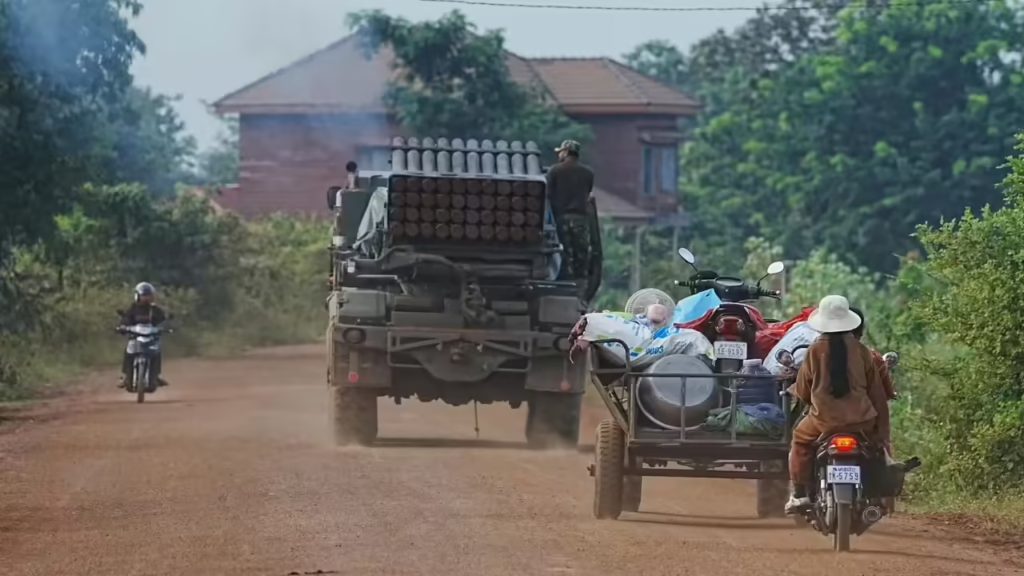
Cambodian leaders have denied any wrongdoing, asserting that they have been truthful in stating they have entered into a temporary ceasefire agreement with Thailand’s government; however, Thailand has insisted it never accepted the terms of a formal ceasefire agreement and is seeking assurances from Cambodia that it will not violate the agreement. The continued fighting has displaced thousands of civilians, caused difficulties for trade at key border crossings, and increased tensions along the border due to ongoing artillery and aerial bombardments. The continuing violence has created growing concern in the region due to the breakdown in diplomatic efforts to bring an end to hostilities.
China moves to fill diplomatic vacuum
As fighting continued to escalate, China expressed a willingness to mediate between the opposing sides. To facilitate this mediation process, the Chinese government dispatched its Special Envoy for Asian Affairs, Mr. Deng Xijun, to visit both Bangkok and Phnom Penh to participate in de-escalation talks. Chinese officials stated they were closely monitoring the situation and encouraged both sides to engage in open dialogue. This gesture by China indicates that Washington’s influence is beginning to diminish. In the past, President Trump claimed credit for the successful negotiation of the Kuala Lumpur Peace Agreement. However, after renewed violence and mutual distrust between the two countries, the agreement has since collapsed. Experts believe this demonstrates that China intends to increase its diplomatic presence within the region. China maintains a strong economic and military relationship with both Thailand and Cambodia, and being able to successfully mediate the current conflict would only increase China’s standing in the Southeast Asian region.
Regional responses expose deeper fault lines in Thailand Cambodia border clashes
The United States issued travel alerts to its citizens for areas near its borders. India urged its citizens to show restraint and not to go into “sensitive zones.” Thailand stated that a landmine explosion, which injured one of its soldiers, sparked fighting. The soldier eventually died, and the Thai military launched airstrikes in retaliation. The government of Cambodia denied placing any landmines in disputed territories. Continuing the long-standing history of conflicts over border demarcations, fighting this year resulted in numerous deaths and more entrenched positions. Thailand and Cambodia disagree over how colonial powers defined borders. They also argue over land around the Preah Vihear Temple as part of their territorial claims. Analysts believe that without significant political will, anything less than direct negotiations will not result in a resolution. True peace will require addressing long-standing grievances that have continued for generations. There are still many questions about what will happen in the future as China’s envoy opens talks with Thailand and Cambodia regarding the ongoing tensions between the two countries.
\For more- https://civiclens.in/category/international-news/
About the Author