The Thailand-Cambodia ceasefire drew strong support from China, which welcomed the truce after weeks of deadly border clashes and announced plans for trilateral talks. On Sunday, China welcomed the signing of a truce between Thailand and Cambodia after weeks of intense fighting along their shared border. Over the past several weeks, the fighting has resulted in at least 101 deaths and displaced more than 500,000 people. China said the Thailand-Cambodia ceasefire could stabilise the region.
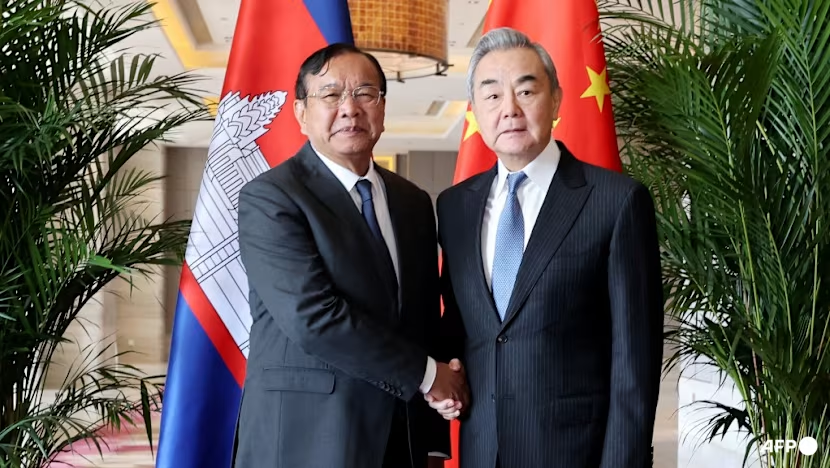
Following the signing of the truce, China is working to arrange for trilateral talks to be held in southwestern China. During this process, Wang Yi, the Chinese foreign minister, recognized the truce as a pivotal step toward achieving lasting peace, stating that it provides a solid foundation for the assurance of regional stability and meets the regional expectations. The Government of China has called for both Thailand and Cambodia to maintain peace and prevent further escalation of the situation, and has also offered to provide humanitarian assistance to support the Cambodian people affected by the violence.
Trilateral Talks Aim to Rebuild Trust
Before discussing with Wang Yi, the Cambodian Foreign Minister, Prak Sokhonn, met with China’s Foreign Minister, Wang Yi. In addition, Thai Envoy Sihasak Phuangketkeow joined Wang Yi in the talks in Yunnan Province. Wang Yi later confirmed China’s desire to see that diplomats and military personnel communicate in a more open and flexible manner. He also stressed the need to establish trust and improve cross-border exchanges. The two days of meetings focused on developing and enhancing border security concerns; China positioned itself as a mediator of the regional conflict.
Thailand Treats Ceasefire as Conditional Test
Thailand’s Minister of Defence, Nattaphon Narkphanit, has publicly stated that the ceasefire agreement is conditional upon Cuba’s compliance and monitoring on the ground by the Government of Thailand. Narkphanit also stated that the Thai Government retains the right to defend itself if there is a violation of the ceasefire agreement. The two sides agreed to remain at the status quo and not to provoke each other by moving troops from their established location. The two sides also established a 72-hour window to monitor compliance.
Previous peace initiatives were thwarted by the injurious results of landmine explosions against Thai soldiers. Both countries have experienced the influence of nationalist sentiments and rhetoric in their negotiations. The long-standing dispute stems from an argument between the two countries regarding border maps drawn during colonial times. Ongoing dialogue will be the determining factor for establishing permanent peace.
For more- https://civiclens.in/category/international-news/
About the Author




1 thought on “Thailand–Cambodia Ceasefire Opens Door to China-Led Mediation”