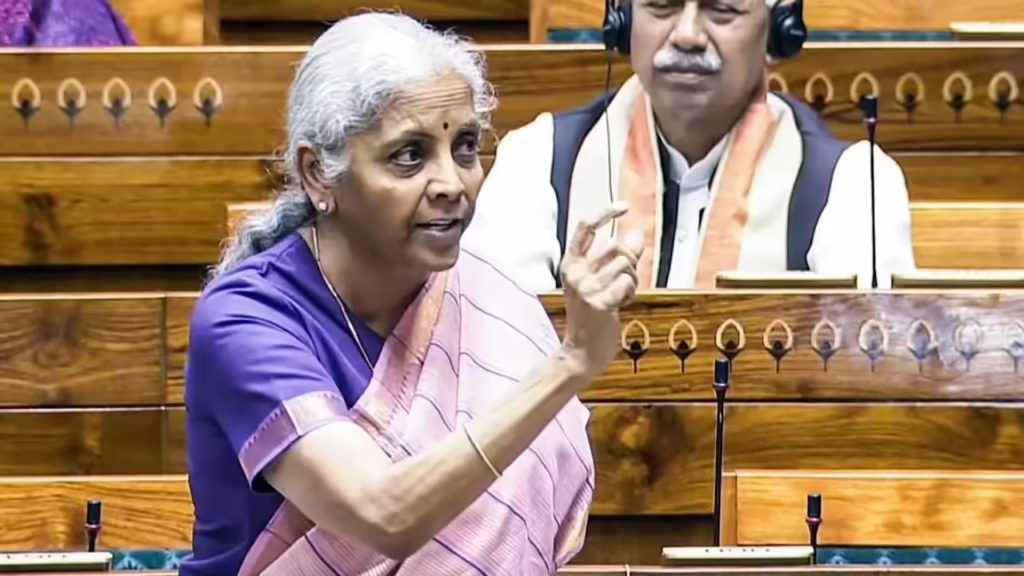
UGC equity regulations triggered nationwide protests and legal scrutiny after students challenged their constitutionality and exclusionary definitions. An initially quiet regulatory change led to national civil unrest. When universities began preparing for reform, students felt excluded. Gradually, protests began to surface as the legal implications of this matter came to light. Eventually, the Supreme Court became involved in this dispute. At the centre of this controversy were new UGC equity regulations. While these regulations appeared to promote inclusion, they raised substantial constitutional issues that prompted petitioners to challenge the definitions that would govern discrimination complaints.

Petitioners claimed the definition restricting protections was arbitrary. Meanwhile, protests were rapidly expanding across multiple states. As tensions continued to rise, the court began to consider how the language used impacted the development of grievance redress processes. Most importantly, judges discovered significant gaps in the definitions included in those processes. For example, general category students had been excluded from the definition entirely.
Therefore, excluding persons could threaten academic spaces due to extreme fragmentation. As a result, the court issued an immediate stay on the implementation of the revised regulations. The older advisory guidelines would remain in effect until further notice. This pause altered the nature of the equity discussion occurring within the United States significantly.
Why the Supreme Court stepped in on UGC equity regulations
First, the Bench examined Regulation 3(C) in detail. Judges identified that the definitions of ‘discrimination’ reached by way of interpretation were vague. Furthermore, the bench cautioned that the ambiguity in the wording could lead to abuse of these regulations. The court was concerned about violations of the equality provisions in the Constitution, and was very concerned that these regulations create disunity among students in educational institutions.
“If we don’t intervene, it will lead to a dangerous impact, will divide society, and will have a grave impact.”
“Prima facie, we say that the language of the regulation is vague and experts need to look into it for the language is modulated so that it is not exploited”.
“We are simply examining it on the threshold of constitutionality and legality.”
“The language needs to be re-modified.”
“We want a free, equitable, and inclusive atmosphere in educational institutions.”
“Unity of India must be reflected in our educational institutions.”
Consequently, the Bench requested that the Centre and the UGC provide their responses as soon as possible. The definitions in Regulation 3(C) will continue to apply until the Bench reviews them.
Protests, reactions, and unresolved tensions
At the same time, there was a lot of public outcry led primarily by those from the main groups. Those who protested against the introduction of these new rules said that they had institutionalised new forms of discrimination. On top of this, they identified the lack of protection for anyone who might be unfairly treated under the new rules as an issue. Immediately after students began rioting, there was a political backlash against student violence. One leader of the BJP publicly stated that he was stepping down because of dissatisfaction.
“Due to the black law, like the reservation bill, brought against the children of the upper caste, I am resigning from my post. This law is extremely dangerous for society and also divisive. There is great resentment. I do not support this reservation bill. Supporting such an unethical bill is completely against my self-respect and ideology.”
Notably, the UGC framed rules after the tragic campus deaths. Those petitions demanded stronger anti-discrimination mechanisms. Now, the court must balance intent with impact.
For more- https://civiclens.in/category/national-news-civiclens-in/
About the Author