Zelensky peace framework marks a cautious diplomatic shift as Ukraine and the United States explore demilitarized zones to reduce conflict in eastern Ukraine. The updated peace framework includes a proposal for demilitarised or special economic zones in the eastern parts of Ukraine that are still being disputed. The updated peace framework is specifically aimed at the areas of Donetsk where Ukrainian forces are still in control.
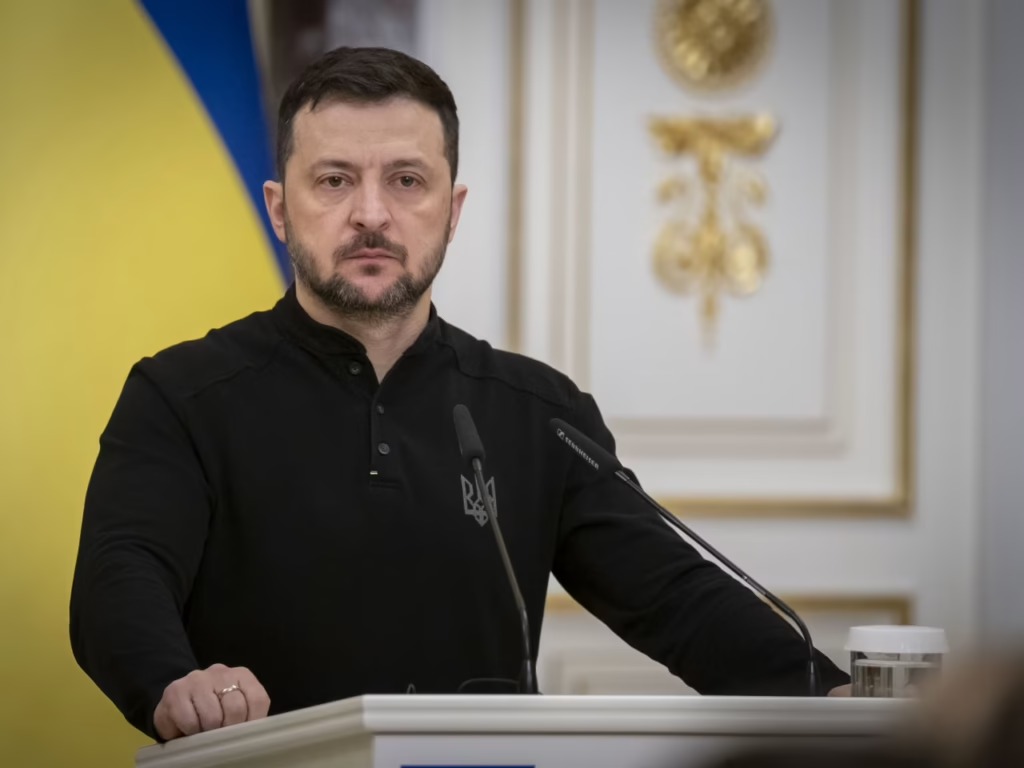
Zelenskyy stated that Ukraine does not agree to a complete withdrawal but does agree to the discussion of redeployment of troops on conditional terms. Therefore, negotiators have proposed the use of demilitarised buffer zones instead of permanent territorial concessions. If Ukraine withdraws any of its forces from the eastern parts of the country, there must be equal distances of Russian troops that are pulled back as well.
Additionally, Ukrainian authorities will administer and police the newly created economic zones, and international forces will monitor the contact line between the two countries and take measures to prevent renewed Russian infiltration.
Security guarantees anchor Zelensky peace framework in US-led negotiations
The revised “20-point Plan” incorporates an updated version of the prior Kremlin draft, which had included various Kremlin demands that have since been taken out of this new draft. Notably, this revision eliminates the previous immediate requirement for Ukraine to withdraw from its eastern areas and makes no acknowledgment of Russian sovereignty over those said occupied territories. Additionally, this revision maintains Ukraine’s right to pursue NATO membership, as President Zelensky specified that the drafted proposal does not include any constitutional guarantees barring NATO membership. As part of this agreement, the Ukrainians would receive security assurances from both the United States of America and Europe. The security assurances call for a coordinated response to any future military incursions from Russia against Ukraine. Therefore, the overall framework is considered to have remained equal between both parties, despite outstanding questions surrounding territorial matters that have yet to be decided.
Moscow’s resistance and Trump’s pressure shape uncertain negotiations
The Kremlin has reviewed the proposal; however, the Kremlin continues to remain adamant to their territorial demands. As such, Ukrainian officials must pull out of the majority of the Donetsk Region, according to Russian Federation officials. President Vladimir Putin of the Russian Federation has publicly shown little desire to compromise. On the other hand, U.S. President Donald Trump continues to advocate for a negotiated settlement with the Russian Federation. Volodymyr Zelensky (President of Ukraine) believes that Russia cannot refute a U.S.-backed peace framework in front of the entire world, and if they do refuse this framework, the U.S. will supply Ukraine with more significant amounts of Western weaponry and potentially increase sanctions against Russia. In the event of an agreement covering troop withdrawals, that agreement must receive a national referendum to approve. After numerous efforts at high diplomacy, the difference between Russian and Ukrainian positions remains considerable.
For more- https://civiclens.in/category/international-news/
About the Author