The conflict in West Asia has escalated, and S. Jaishankar updated Parliament about it while they were in a budget session, which means the Indian government is taking this matter seriously. There are concerns about increased instability within the region, which involves three countries, Iran, Israel, and the United States of America, whose tension will place the safety of the millions of Indians who work and live throughout the Gulf Region at risk.
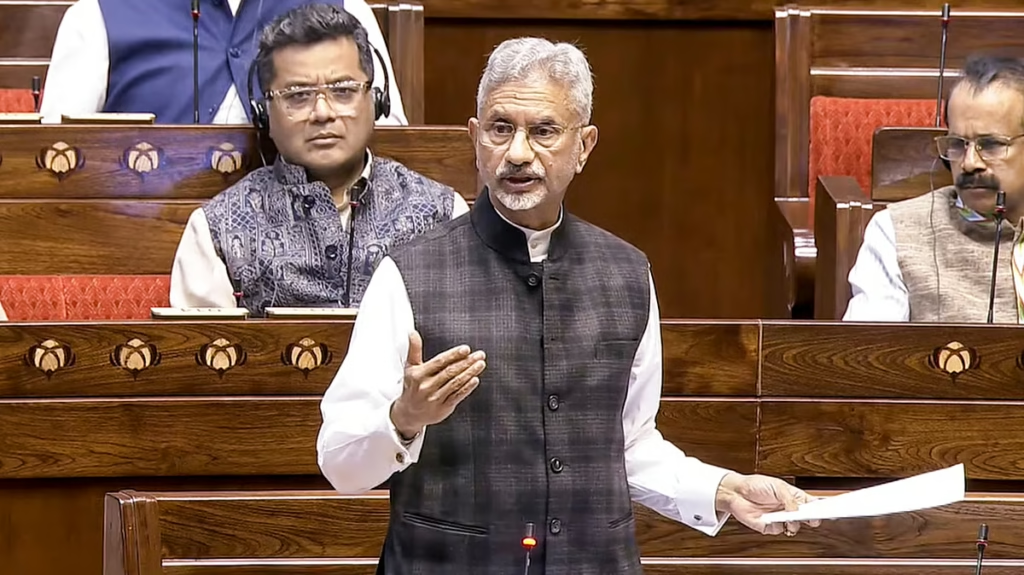
Jaishankar discussed the latest developments and responses from the Indian government and confirmed that the Indian government would continue to monitor the situation closely and would coordinate with its duty stations outside of India. The Indian Government is also in constant communication with its regional partners. As a result, the Indian government will continue to monitor the risks posed to its citizens and the flow of goods across key trade routes.
Opposition seeks wider debate on the India-West Asia crisis
As several members of Parliament, primarily opposition leaders, called for an extensive debate in Parliament, they reasoned that the current crisis necessitated a detailed discussion of policies. However, policymakers were also worried about the energy security issues as a result of increasing fuel prices and their potential impact on the economy of India. Furthermore, the value of the rupee recently decreased compared to the dollar. Other groups, such as farmers, were critical of how the conflict was affecting them on a global scale.
While some of the protests were related to the increasing price of fuel due to tensions between countries, the farmers who demonstrated in New Delhi called for an increase in the price of their crops. Support was also provided by other groups, such as Samyukt Kisan Morcha, which supported the demonstration, as well as trade unions that called for a national strike. On that basis, groups asked all citizens to participate in an “Anti-Imperialist-War Day for World Peace,” and as such, are now causing increased political problems within the country.
Government prioritises the safety of Indians in the Gulf
At this time, protecting the lives of Indian citizens living abroad has been highlighted by the government. There are millions of Indian nationals employed within the Gulf economies; therefore, the government has been very closely monitoring regional unrest. Government officials are closely cooperating with the diplomatic channels to track both travel and evacuation needs of those Indians living in the region.
On a positive note, there have been thousands of successful evacuations back to India. The recent opening of airspace permitted some limited evacuation flights; however, there is still no clarity as it relates to conditions in the region regarding security. The Government will continue to ensure that contingency plans are reviewed in addition to further evaluations of trade and energy sources. The area of West Asia is important for the Indian economy and, for this reason, crisis managers are treating the current situation very seriously. Officials said contingency plans will remain active while the India-West Asia crisis continues to evolve.
For more- https://civiclens.in/category/national-news-civiclens-in/
About the Author


